


Table of Contents
- What Makes Clothing Comfortable for Active Toddler Girls
- Best Fabrics for Toddler Clothes: What to Look For
- Toddler Girl Activewear Tops and Sets for Play
- Toddler Girl Leggings and Joggers That Stay Put
- Easy-to-Dress Toddler Clothes for Busy Mornings
- Sizing, Fit, and Room-to-Grow Guidance
- Caring for Toddler Activewear So It Lasts
- Frequently Asked Questions
Last Updated: October 5, 2026
What Makes Clothing Comfortable for Active Toddler Girls
Comfortable clothing for active toddler girls comes down to three things: soft breathable fabric, stretch that moves with her, and a fit that never digs or slips.
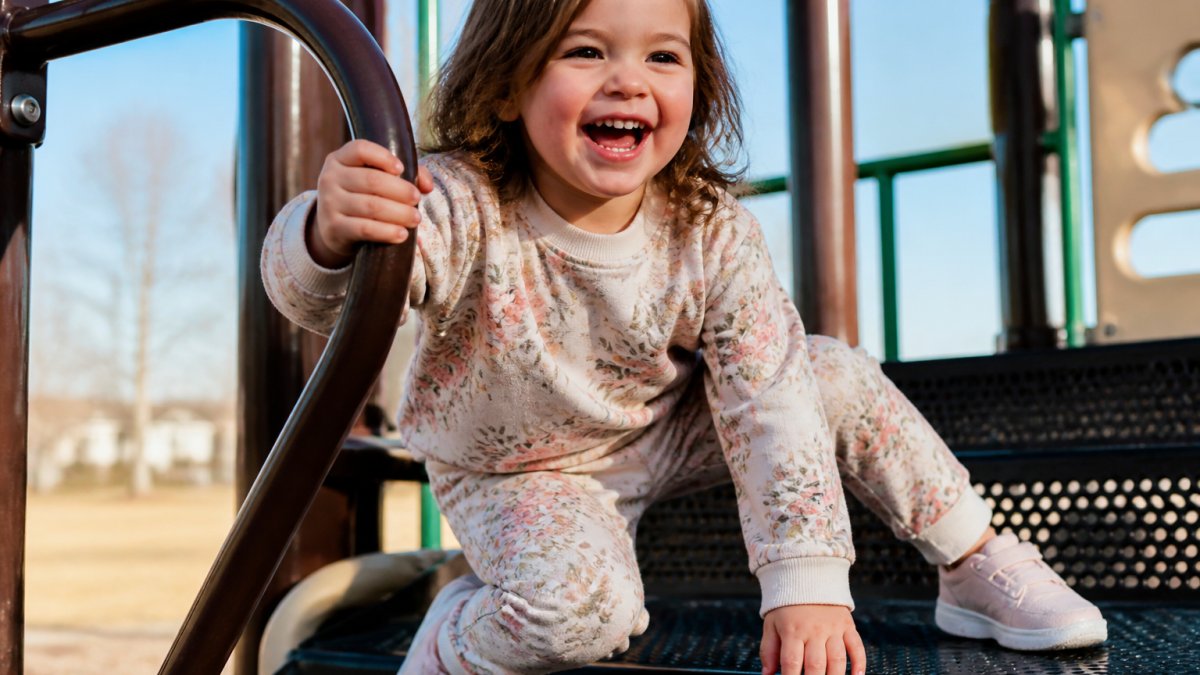
Fabric First: Soft, Breathable, and Stretchy
Breathable fabric lets air pass through and moves moisture away from skin, so a child stays cool instead of damp. For toddlers, that usually means a cotton blend with a little spandex.
A common mistake is buying by how a fabric feels in the store rather than how it behaves after twenty minutes of running. Cotton alone holds sweat; all-synthetic fabric dries fast but feels slick.
Fit That Lets Her Move
A comfortable fit leaves room at the waist, shoulders, and knees without looking baggy. Elastic waistbands with a working drawstring, relaxed legs, and necklines that clear the head easily matter more than the size on the tag.
A snug fit is not a safety feature. If she cannot squat, climb, or reach overhead without the waistband rolling down, the size is wrong.
Best Fabrics for Toddler Clothes: What to Look For
The best fabric for toddler clothes balances softness, breathability, stretch, and durability, and no single fiber does all four alone. Blends work because each fiber covers the other's weakness.
Here is what each fiber does:
- Cotton, soft, breathable, absorbs moisture. Weakness: holds sweat against skin, shrinks, wrinkles.
- Spandex (elastane), stretch and recovery so knees and elbows bend without bagging out. Usually 3-10% of a blend is enough.
- Polyester, dries fast, resists shrinking and pilling, holds color. Weakness: feels slick and can trap odor if not washed promptly.
A 95% cotton / 5% spandex jersey is the workhorse blend for everyday toddler wear. A 60/40 cotton-poly interlock is more durable and dries faster but less plush.
Fabric weight matters more than most parents realize
Fabric weight, measured in grams per square meter (GSM), predicts whether a piece will feel flimsy or substantial:
- Lightweight (roughly 120-150 GSM), summer tees, tanks, and shorts. Breathes well, but thin knits wear faster at the knees.
- Midweight (roughly 160-200 GSM), the sweet spot for year-round leggings, joggers, and tees. Holds shape, hides stains, survives washing.
- Heavyweight (roughly 220+ GSM), sweatshirts, hoodies, and cool-weather joggers. Warm and durable, but slower to dry.
If a product page does not list GSM, squeeze the fabric: if you can see your hand through it held to light, it is lightweight; if it springs back thick and opaque, it is midweight or heavier.
Sensory comfort: the factor most guides skip
For toddlers with skin sensitivities, the fabric itself matters less than how it is finished. Look for:
- Tagless or printed neck labels, which eliminate the most common source of 'it itches' complaints.
- Flatlock or coverstitched seams rather than bulky overlocked seams, especially at shoulders and side seams.
- Encased elastic at the waist rather than exposed elastic, which leaves marks and feels scratchy.
Before buying, turn the garment inside out and run the back of your hand along every seam and label. If it catches or feels rough to you, it will feel worse to a toddler who cannot say why.
Cotton blends vs. synthetic performance fabrics
Cotton blends win for everyday wear and sensitive skin: gentle, breathable, and easy to wash. A 95% cotton, 5% spandex blend, like the one in our Red Knit Ruffle Romper, gives softness plus stretch.

Synthetic performance fabrics win for sweat management and quick drying during hard play, making them the better pick for a long, hot afternoon outside.
A practical rule: match the fabric to the activity. Cotton-blend knits for indoor and everyday wear, performance knits for hot-weather outdoor play, and midweight cotton-poly fleece for cold-weather layering.
You can read more about fiber properties and care from the U.S. Federal Trade Commission's textile labeling guidance, which explains what those fabric percentages on the tag actually tell you.
Toddler Girl Activewear Tops and Sets for Play
Toddler girl activewear works best as a set: a lightweight top paired with a matching bottom that moves the same way. Sets take the guesswork out of mornings and look intentional even when grabbed in a hurry.
Two of our favorites cover opposite seasons.
Retro Floral Jogger Set and Guacamole Short Set
The Retro Floral Jogger Set ($75.00) handles cooler days with a jogger bottom and matching top in a playful floral print. It reads sporty without looking like gym clothes, so it works for school drop-off and the playground in the same afternoon.

The Guacamole Short Set ($38.00) is the warm-weather counterpart: shorts plus a lightweight top, easy on and off, built for months when everything ends up dusty by lunch.
Toddler Girl Leggings and Joggers That Stay Put
Toddler girl leggings and joggers stay put when the waistband is elastic, the fabric has real stretch, and the leg length fits her height rather than her age.
Stretchy bottoms do the heavy lifting in a toddler wardrobe: they handle crawling, squatting, sliding, and floor sitting without restricting movement, and they layer under dresses when the weather turns.
Jay Twill Pants for Everyday Wear
Not every day calls for knit. The Jay Twill Pants ($46.00) use a soft-touch twill that holds up to active play while looking polished. The elasticized waistband with a functional drawstring adjusts as she grows, and the straight-leg cut leaves room to move.

Deep side pockets matter more than you would expect: toddlers collect things, and a pocket saves you from carrying a fistful of acorns.
Easy-to-Dress Toddler Clothes for Busy Mornings
Easy-to-dress toddler clothes reduce the steps between pajamas and the door: one-piece designs, wide neck openings, snaps, and stretchy waistbands all cut time. On a morning when everyone is already late, those seconds add up.
The practical test: can she step in, pull up, and be done without you wrestling a sleeve over her head?
Red Knit Ruffle Romper and Benny Dress and Bloomer
The Red Knit Ruffle Romper ($44.00) is a one-piece with ruffles at the neckline, sleeves, and hem, plus snaps for easy changes. It looks put together for playdates and photos while functioning like a romper.
The Benny Dress and Bloomer ($46.00) solves the dress problem for active kids. The bloomer underneath means she can climb and tumble without the dress becoming a hazard or a constant adjustment.
| Piece | Price | Best For | Why It Works |
|---|---|---|---|
| Retro Floral Jogger Set | $75.00 | Cooler days, school wear | Matching top and jogger, playful print |
| Guacamole Short Set | $38.00 | Warm weather, playground | Lightweight shorts and top |
| Jay Twill Pants | $46.00 | Everyday wear, outings | Adjustable drawstring waist, deep pockets |
| Red Knit Ruffle Romper | $44.00 | Playdates, photos | One-piece with snaps, 95% cotton |
| Benny Dress and Bloomer | $46.00 | Dresses for active kids | Bloomer keeps her covered while climbing |
Sizing, Fit, and Room-to-Grow Guidance
Room to grow means buying for her height and current mobility rather than her age label, then checking three points: shoulders, waist, and stride. A garment that fits at all three lasts a season instead of a month.
Toddler sizing runs roughly 2T through 5T, and labels are inconsistent between brands: a 3T from one label can fit like a 2T from another.
How to measure at home in five minutes
You need a soft tape measure and a flat surface. Measure over light clothing, not a diaper or bulky outfit.
- Height, stand her against a wall, heels together, and mark the top of her head. This is the most reliable number for choosing a size.
- Chest, measure around the fullest part, keeping the tape level and snug but not tight.
- Waist, measure at her natural waistline, roughly the belly button for toddlers. Do not pull the tape tight; you want the resting measurement.
Write these four numbers down and keep them in your phone for every order.
The room-to-grow rule of thumb
Parents who get a full season out of toddler clothes buy for one size of growth room in knits and no growth room in structured pieces:
- Knit leggings, joggers, and tees, buy the size matching her current height; knits stretch through a growth spurt and tolerate being slightly large without looking sloppy.
- Structured pieces like twill pants, dresses, and rompers, buy the size that fits now. A too-large structured piece droops at the shoulders, drags at the hem, and becomes a tripping hazard before she grows into it.
- Outerwear and layering pieces, size up one, since they are worn over other clothes and extra room does not affect mobility.
When to size up
- If the waistband leaves red marks after an hour of wear
- If she cannot squat fully without the fabric pulling at the knee
- If sleeves stop above the wrist bone
When to stay put
- If the neckline falls off one shoulder
- If pants pool over her shoes and become a tripping risk
- If the crotch seam hangs low enough that she waddles when she walks
Fit checks that catch problems before she wears it
The three-move test takes thirty seconds and catches most fit problems:
- The squat test, have her squat all the way down. The waistband should stay in place and the knees should not pull tight.
- The reach test, have her reach both arms overhead. The shirt should not ride up past her belly button, and the shoulders should not pull.
- The step test, have her take five big steps. Pants should not twist, bunch, or slide down.
If a piece fails any of these, it will fail during real play. Return it or size differently.
Why the size chart is not the whole story
Size charts describe the child the garment was designed for, not the garment's actual measurements. Two brands can both list '3T' and differ by two inches in the waist. Between sizes, the tiebreaker is fabric: stretchy knits forgive a slightly small fit, while wovens and structured pieces do not.
Buying kids' clothes without a fitting room is a real concern.
Caring for Toddler Activewear So It Lasts
Toddler activewear lasts longer when you wash cold, skip dryer heat, and treat stains before they set.
The care routine that works:
- Machine wash cold on a normal cycle
- Non-chlorine bleach only when needed
- Tumble dry low, or air dry knits and anything with stretch
Follow the tag. The Red Knit Ruffle Romper calls for machine wash cold, non-chlorine bleach only when needed, and tumble dry low, and that routine keeps the cotton-spandex blend in shape.
Cost per wear is the honest way to judge value here. For guidance on keeping fabrics in good condition, the American Cleaning Institute's fabric care resources cover stain treatment and fiber-specific washing in plain terms.
The hard part of dressing an active toddler is not finding something cute. Explore all collections and find the pieces she will actually keep on.
Frequently Asked Questions
What clothes are most comfortable for active toddler girls?
Look for soft, breathable fabrics with stretch, like cotton-spandex blends, and fits that allow freedom of movement. Leggings, joggers, and matching sets work well because they move with her instead of restricting her. The Retro Floral Jogger Set at $75 and the Guacamole Short Set at $38 are both built for play. Avoid stiff seams, tight waistbands, and scratchy tags that cause discomfort during active play.
What fabrics are best for toddler girl clothes?
Cotton blends with a small amount of spandex offer the best balance of softness, breathability, and stretch. The Red Knit Ruffle Romper is 95% cotton and 5% spandex, which gives it a soft feel with enough give for crawling and climbing. Moisture-wicking options help during sweaty play sessions. Look for brushed interiors in cooler months and lightweight, airy weaves in summer to keep her cool and dry.
Are leggings or joggers better for toddlers?
Both work well, but they serve slightly different purposes. Leggings are lighter and ideal for layering under dresses or wearing in warm weather. Joggers offer more coverage and warmth with a looser fit through the leg. For active toddler girls, having a mix of both means you are covered for any activity or temperature. Stretchy bottoms with an elastic waistband make both options easy for her to pull on herself.
How should toddler clothes fit for active play?
Clothes should be snug enough to stay in place but loose enough for full range of motion. Check that she can squat, reach overhead, and run without the waistband sliding down or sleeves riding up. Easy-fit styles with adjustable drawstrings, like the Jay Twill Pants at $46, let you fine-tune the fit as she grows. Avoid sizing up too far, since overly baggy clothing can trip her during active play.
How do I choose toddler clothes that are easy to put on and take off?
Look for elastic waistbands, snaps, and simple necklines that do not require complex fastening. Easy-to-dress toddler clothes help during potty training and busy mornings. The Red Knit Ruffle Romper has convenient snaps for quick changes, and the Benny Dress and Bloomer at $46 slips on without fuss. Stretchy fabrics also make dressing easier because they glide over the head and limbs without a struggle.