


Table of Contents
- What a Family Capsule Wardrobe Actually Is
- Why a Family Capsule Wardrobe Saves Time and Money
- Start With a Closet Audit and Inventory
- Choose Your Family Capsule Wardrobe Color Palette for Family Photos
- How Many Clothes in a Capsule Wardrobe by Age and Role
- Select Versatile Wardrobe Essentials for Your Family
- Build Your Family Capsule Wardrobe for Each Season
- Your Family Capsule Wardrobe Checklist and Shopping List
- Frequently Asked Questions
Last Updated: October 11, 2026
What a Family Capsule Wardrobe Actually Is
A family capsule wardrobe is a curated collection of versatile, mix-and-match clothing pieces that work across multiple family members and seasons. It focuses on neutral colors, quality fabrics, and timeless silhouettes that coordinate effortlessly, fewer pieces, smarter choices, endless outfit combinations.
You intentionally select pieces that coordinate, a khaki twill pant with a striped button-down, layered under a quarter-zip sweater. One color palette ties everything together, making outfit planning automatic.

Why a Family Capsule Wardrobe Saves Time and Money
A family capsule wardrobe eliminates decision fatigue. Every morning, your kids pull out pieces that work together, no scrambling, no mismatched outfits.
A capsule wardrobe forces intentional spending: does this work with what we own? Will my child wear it across seasons? Can it hand down? Quality pieces worn repeatedly deliver better cost-per-wear than trendy items worn twice.
Start With a Closet Audit and Inventory
Audit what you already own. Pull out every piece for each family member and sort by category: tops, bottoms, outerwear, shoes. Be honest about what actually gets worn.
Create a simple inventory noting color, fabric, and condition. This reveals patterns: five white t-shirts but nothing in navy, or pants that no longer fit.
Note what your family actually wears. If your school-age child gravitates toward comfortable fabrics or your toddler resists buttons, that informs future purchases.
This audit surfaces hand-me-downs and pieces to repurpose. A sweater too big now might fit next year; outgrown jeans can be hemmed for a younger sibling.
Choose Your Family Capsule Wardrobe Color Palette for Family Photos
A unified color palette makes a family capsule wardrobe work. Choose 3-4 neutral base colors that suit your lifestyle.
Warm neutrals (oatmeal, khaki, soft brown) create a cozy feel; cool neutrals (cream, gray, navy) feel crisp. Many families mix both.
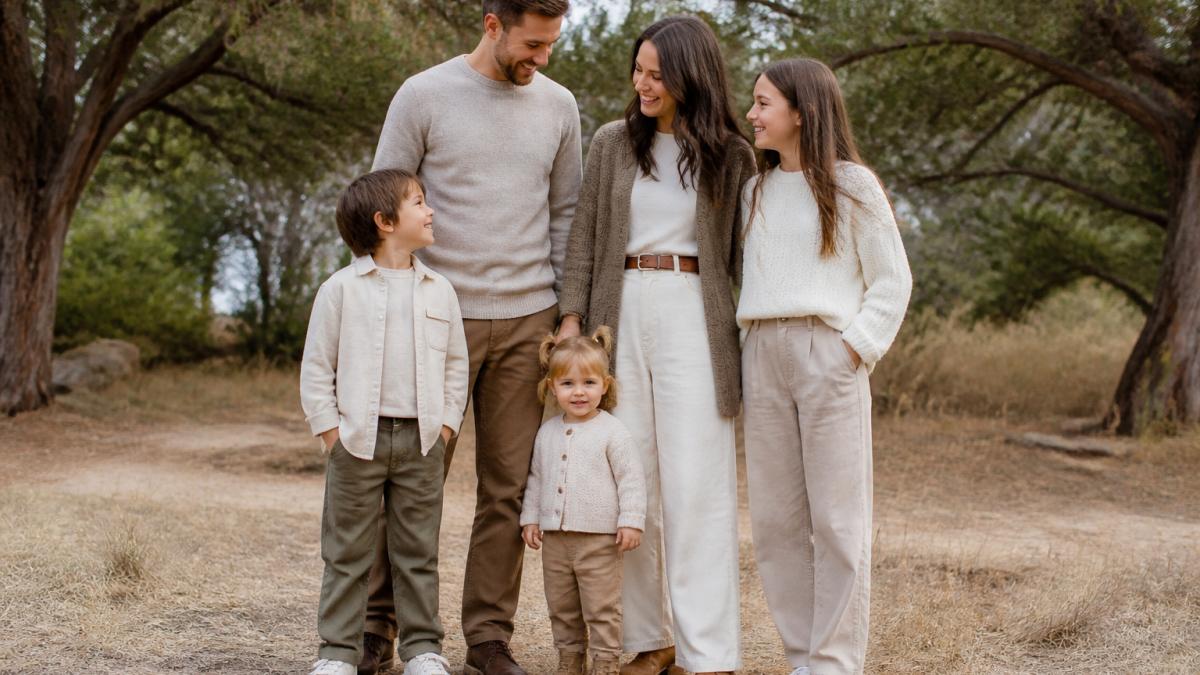
Neutrals coordinate with everything. A child in oatmeal works alongside a sibling in khaki and a parent in cream.
This palette approach transforms family photos. Everyone looks intentionally coordinated without matching identically.
Test your palette before committing. Gather pieces in your chosen colors and assess how they feel together.
How Many Clothes in a Capsule Wardrobe by Age and Role
The number of pieces varies by age, role, laundry schedule, and lifestyle. What matters is understanding why those numbers work for your household.
| Role/Age | Recommended Piece Count | Laundry Frequency | Key Considerations |
|---|---|---|---|
| Toddler (1-3 years) | 8-12 pieces | 2-3 times weekly | Rapid growth (3-6 months), frequent spills and changes, pieces worn 2-3 seasons max |
| School-age (4-10 years) | 12-18 pieces | 1-2 times weekly | Growth every 6-12 months, school uniform or dress code, play wear durability matters, hand-me-down candidates |
| Tween (11-14 years) | 15-20 pieces | Weekly | Slower growth, social awareness of fit, multiple activity contexts (school, sports, social), can wear pieces 2+ years |
| Parent (working outside home) | 15-20 pieces | Weekly | Visible in multiple contexts, weather transitions, professional or casual dress code, pieces worn 200+ days/year |
| Parent (home-based) | 10-15 pieces | Weekly or bi-weekly | Comfort priority, durability over polish, fewer context switches, pieces worn less frequently |
These counts include tops, bottoms, one outer layer, and shoes. Buy socks and undergarments separately in bulk.
Laundry frequency: Two loads weekly means pieces cycle faster; operate on the lower end of piece counts. One load weekly means pieces sit longer; add 2-3 extra items.
Growth planning: Buy pieces with room to grow, loose fits, adjustable waistbands, roll-able cuffs. Pants with an inch of hem room serve two seasons instead of one.
Hand-me-downs: Plan piece counts to support hand-me-downs. A tween's outgrown sweater becomes a school-age sibling's current piece. A well-organized system reduces household clothing budget by 20-30%.
Activity needs: A child in sports needs durable bottoms and extra tops. Add 2-3 pieces if your family has high-activity lifestyles.
Example: A family of four doing laundry twice weekly: Parent 1 (working): 15 pieces, Parent 2 (home-based): 12 pieces, School-age child: 14 pieces, Toddler: 10 pieces. Total: 51 pieces. Add 3-5 pieces per person if doing laundry once weekly.
A toddler's 10-piece capsule includes four soft knit pants, four tops, one sweater, one outer layer. Every piece coordinates, creating 50+ outfit combinations.
Adding pieces: If your family runs out of clean clothes mid-week, add 2-3 pieces. If pieces sit unworn for weeks, you have too many.
Select Versatile Wardrobe Essentials for Your Family
Every family capsule wardrobe needs foundational pieces that work across seasons and contexts. These essentials are your building blocks.
Neutral bottoms form the base. Khaki twill pants work for school and casual weekends. Dark denim works similarly. Navy or gray pants add variety. Soft knit pants with elastic waists work for toddlers; tailored neutral pants work for parents.
Neutral tops layer easily and coordinate endlessly. A white v-neck sweater works under button-downs and over long sleeves. Striped button-downs like the Dark Brown Stripe Button Down from MK Collective work dressed up or casual.

One quality outer layer per season matters more than multiple options. A neutral quarter-zip sweater handles fall and spring; a lightweight jacket works summer; a structured coat handles winter.
Shoes anchor outfits. One pair of neutral sneakers, one pair of casual slip-ons, and one pair of dress shoes covers most family needs.
Accessories extend your capsule without adding bulk. Keep these minimal, one or two per family member.
Build Your Family Capsule Wardrobe for Each Season
A family capsule wardrobe for each season means rotating pieces rather than buying entirely new wardrobes four times a year.
Spring and fall: The layering seasons
These shoulder seasons call for layering pieces that work across temperature swings. Your neutral pants transition seamlessly.

For families with multiple children, spring and fall are ideal times to assess hand-me-downs.
Summer: Lighter fabrics, shorter sleeves, more frequent changes
Summer requires lighter fabrics and shorter sleeves. Short-sleeve button-downs replace long-sleeve versions. One linen or cotton sweater handles air-conditioned spaces.
For families with young children, summer means more frequent clothing changes. You may need to add 2-3 extra tops to your summer capsule.
Build your summer capsule around your actual plans.
Winter: Warmth, layering depth, and durability
Winter demands warmth and strategic layering. Long-sleeve base layers underneath button-downs add insulation without bulk.
For families in cold climates, winter is when piece count matters most.
Winter is also when hand-me-downs become critical. Store outgrown coats and boots carefully for younger siblings.
Transitional climate strategy
Assessing and rotating seasonally
Rather than buying new pieces each season, evaluate what you have. Does your current capsule work for the upcoming season with minor adjustments?
Before each season, try on pieces on each family member. Note what fits, what's worn out, and what needs replacing.
Replacement cycles and budget planning
Quality basics wear out. A white t-shirt worn 2-3 times weekly lasts 12-18 months before fading or stretching out.
For families with multiple children, stagger replacement purchases.
Seasonal storage and organization
Store off-season pieces in breathable containers. Label by season and child. When rotating seasons, check for stains, damage, or pieces that no longer fit.
Your Family Capsule Wardrobe Checklist and Shopping List
Use this checklist to build or refine your family capsule wardrobe. Adjust quantities based on your family's specific ages and lifestyle. Print it, modify it, use it as your shopping guide.
Bottoms:
- 3-4 pairs neutral pants (khaki, navy, gray, or dark denim)
- 1-2 pairs shorts (if your climate warrants)
- 1 pair dress pants or nicer bottoms
Tops:
- 3-4 neutral short or long-sleeve tops
- 2-3 striped or patterned button-downs
- 1-2 white or cream basics
Layers:
- 2 neutral sweaters in different weights
- 1 quarter-zip or pullover sweater
- 1 cardigan (optional but versatile)
Outerwear:
- 1 structured jacket or coat per season
- 1 lightweight layer for transitions
Shoes:
- 1 pair neutral everyday sneakers
- 1 pair casual slip-ons or flats
- 1 pair dress shoes
Accessories (minimal):
- 1-2 scarves in neutral colors
- Simple jewelry or hair accessories
- One belt per neutral shade
Start with the bottoms and basic tops. These form your foundation. Add layers and outerwear next. Accessories come last. This sequencing ensures your core pieces coordinate before you add anything else.
When shopping, bring your color palette reference. Photograph existing pieces and compare new options. Many boutiques stock thoughtfully curated pieces that coordinate naturally.
Building a family capsule wardrobe transforms how your family gets dressed. Mornings become simpler, photos look intentionally coordinated, and your budget stretches further because every piece earns its place. Start with an honest closet audit, choose your color palette, and build slowly. Quality pieces that coordinate across seasons and family members deliver value for years. At MK Collective, we've designed our collections around this principle, thoughtfully curated pieces that work together, so your family spends less time choosing outfits and more time enjoying them. Explore our curated family collections and discover pieces that fit your family's lifestyle and style.
Frequently Asked Questions
What is the difference between a capsule wardrobe and a family capsule wardrobe?
A traditional capsule wardrobe is a curated collection of versatile pieces for one person. A family capsule wardrobe extends that concept across multiple household members, parents, toddlers, school-age children, and tweens, ensuring everyone has pieces that coordinate, mix well, and work across seasons. The key difference is intentional color coordination and size flexibility to account for growth, hand-me-downs, and different lifestyle needs within one household.
How many clothes should be in a family capsule wardrobe total?
A functional family capsule typically includes 40-60 core pieces per person, adjusted by age and activity level. For a family of four, that's roughly 160-240 total pieces, but this varies. Toddlers need fewer pieces due to growth; school-age children benefit from more durable play clothes; adults balance work and casual wear. Focus on quality and versatility rather than hitting a specific number. Each piece should earn its place by mixing with at least three other items.
What colors work best for a family capsule wardrobe for family photos?
Neutral tones create the most cohesive look: cream, ivory, soft gray, khaki, navy, and warm oatmeal. Add one accent color across the family, sage green, rust, or muted blue, for visual interest without clashing. Avoid bright primary colors and busy patterns in coordinated pieces; reserve those for individual personality items. Neutrals photograph well, age gracefully, and mix seamlessly across seasons and age groups, making outfit planning simpler.
How do I handle hand-me-downs and children's growth in a family capsule?
Plan for growth by buying slightly roomier fits for younger children and layering strategically. Store outgrown pieces in labeled bins organized by size and season, not child. When a piece fits the next child, it automatically integrates into the capsule if it matches your color palette. This reduces new purchases and builds sustainability into your system. Track what sizes each child moves into annually so you can anticipate gaps and shop intentionally rather than reactively.
Can I build a family capsule wardrobe on a budget?
Yes. Start by auditing what you already own and keeping pieces that fit your color palette. Invest in a few high-quality basics (like neutral sweaters and durable pants) that will withstand frequent washing and hand-me-downs, then fill gaps with affordable, on-trend pieces from boutiques like MK Collective. Seasonal shopping and quality over quantity stretch your budget further.
How often should I refresh or update a family capsule wardrobe?
Refresh seasonally by swapping out weather-inappropriate items and adding 3-5 new pieces per person per season to keep the wardrobe current. Annually, audit what's worn, stained, or outgrown and replace it. Trends shift, so rotate in updated cuts or colors while keeping your neutral foundation stable. With children, plan for size changes every 6-12 months depending on age, which naturally refreshes the wardrobe. Quality pieces last multiple seasons and children, reducing the need for constant replacement.
What's the best way to organize a family capsule wardrobe so everyone can dress themselves?
Organize by category (tops, bottoms, outer layers) and color within each category, not by person. This makes mix-and-match visible and lets older children select outfits independently. Use clear bins for off-season items labeled by season and size range. Store frequently worn pieces at eye level for each child's height. A simple outfit-combination chart posted in the closet or bedroom helps children and parents see what works together without overthinking it, speeding up morning routines.